Arduino Pwm Beispiel
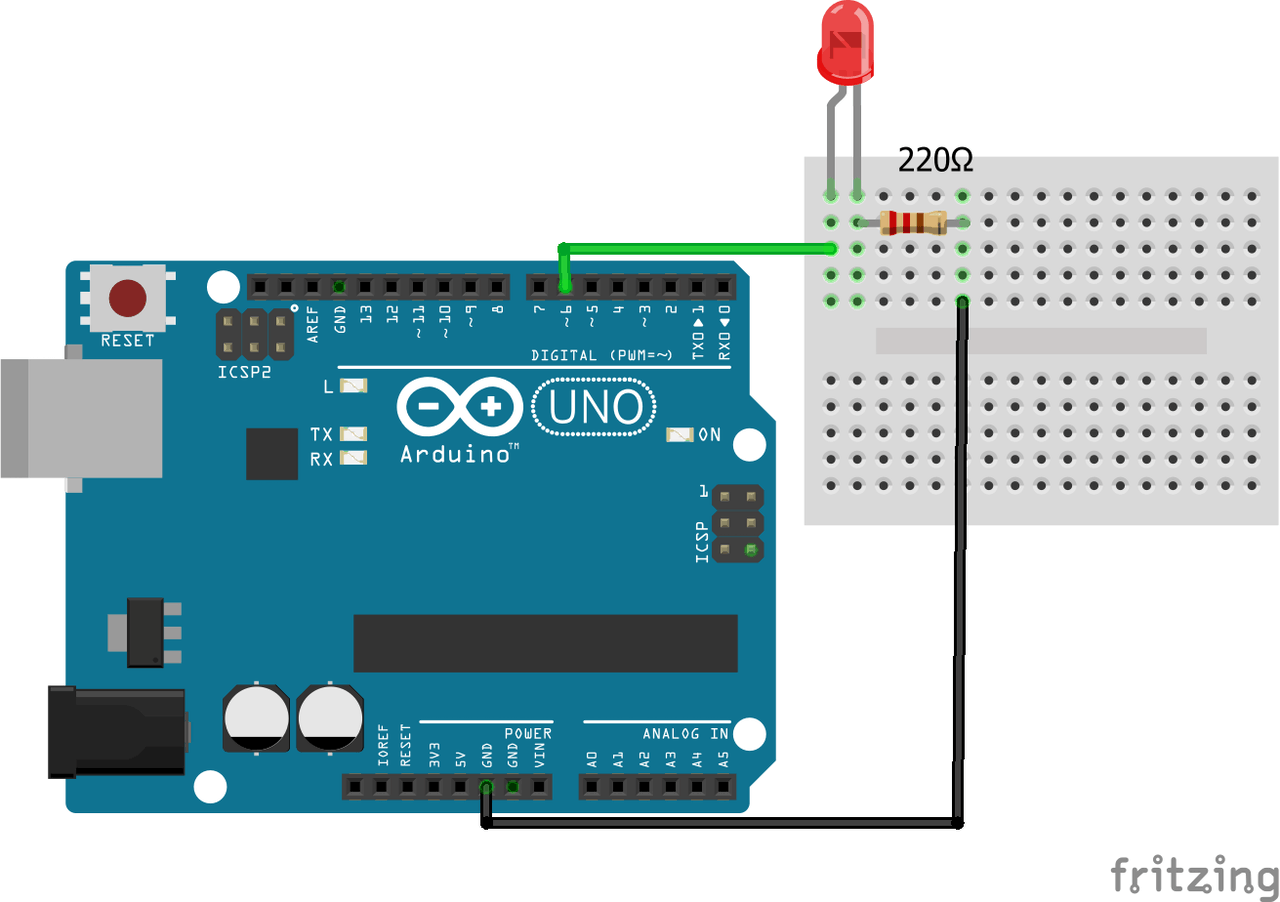

Pin pin on which we want to generate pwm or analog signal.
Arduino pwm beispiel. The arduino can do this in a number of ways. Three ways to read a pwm signal with arduino. Pwm pulse width modulation is a modulation technique that controls the width of the pulse based on modulator signal information pwm can be used to encode information for transmission or to control of the power supplied to electrical devices such as motors. Pulse width modulation or pwm is a common technique used to vary the width of the pulses in a pulse train.
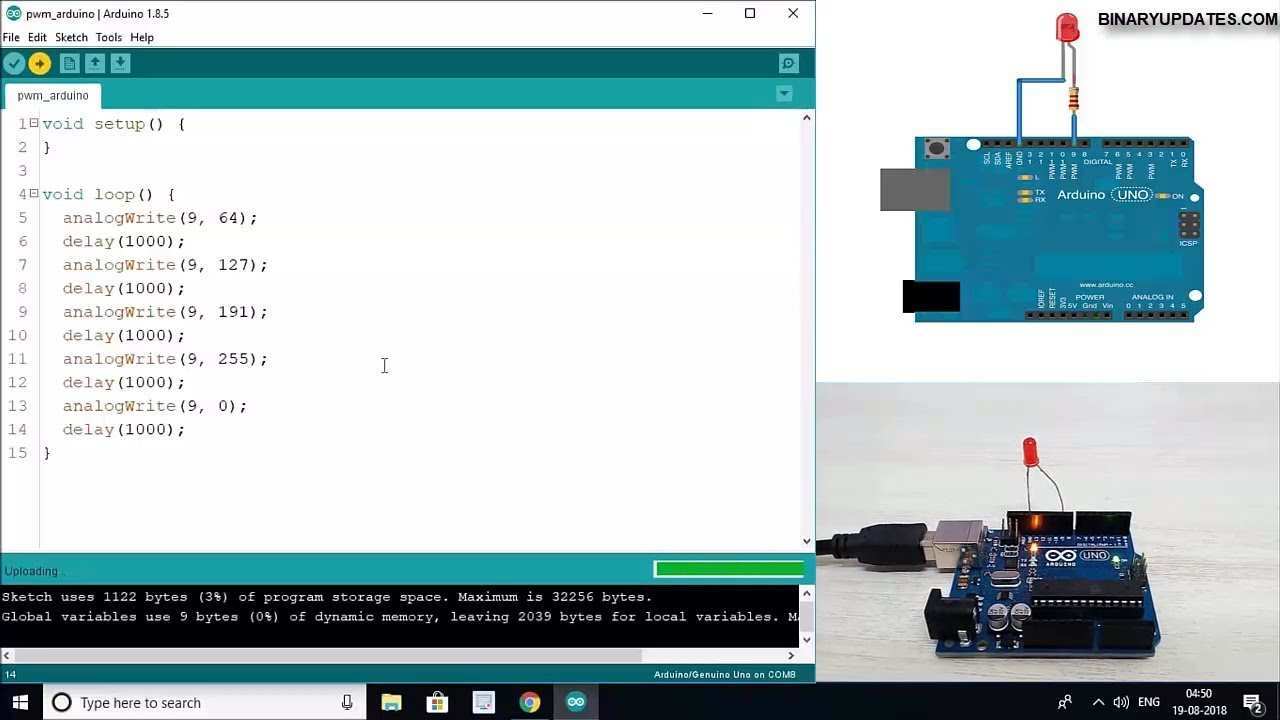
Analogwrite 0 means a signal of 0 duty cycle. The frequency of this generated signal for most pins will be about 490hz and we can give the value from 0 255 using this function. This function create a square wave pwm signal. Analogwrite 127 means a signal of 50 duty cycle.
Pwm has many applications such as controlling servos and speed controllers limiting the effective power of motors and leds. Duty cycle it lies in between 0 0 always off 255 100 always on. Arduino functions for pwm. Analogwrite 127 means a signal of 50 duty cycle.
Led fading using arduino pwm. Pulse width modulation using an arduino travis meade 11 14 2014 abstract pulse width modulation is a process that is used in many applications. Analogwrite 0 means a signal of 0 duty cycle. Analogwrite pin duty cycle it is used to generate pwm or output analog value to a specified pwm channel.
Analogwrite 3 127 generates pwm of 50 duty cycle. The pwm frequency on arduino pins are 976 cycles per seconds herz for the esp8266 up to 1 khz and for the esp32 up to 40 mhz. These pwm pins are shown in below image. The arduino ide has a built in function analogwrite which can be used to generate a pwm signal.
To generate a pwm signal you use the function analogwrite pin value. The arduino ide has a built in function analogwrite which can be used to generate a pwm signal. The frequency of this generated signal for most pins will be about 490hz and we can give the value from 0 255 using this function. This application note will look at what pulse width modulation is and will also explain how to.
There are 2 fast pwm modes. Fast pwm which will give you 62 5khz with prescaller options to slow it down by a factor of 8 64 256 or 1024.